Beyond Subtitles: How AI-Powered Dubbing is Changing International Film Consumption in the U.S. by 2026
AI-powered dubbing is poised to significantly transform international film consumption in the U.S., with a projected 15% growth by 2026. This technological advancement addresses long-standing barriers to foreign content.
Advertisements
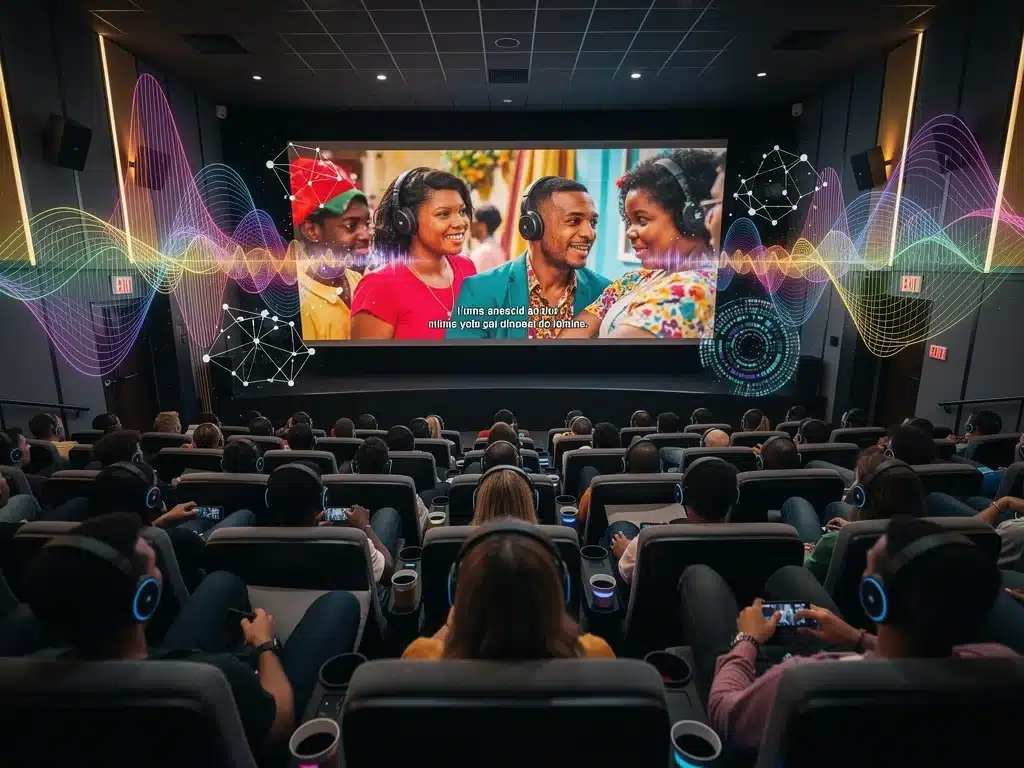
Have you ever skipped a brilliant foreign movie just because you didn’t feel like reading subtitles? By 2026, AI Dubbing is set to boost US consumption of international films by 15%, breaking down language barriers for good.
This cutting-edge neural voice technology goes far beyond traditional voiceovers. By synthesizing lifelike voice clones that match the original actors’ emotion, tone, and lip sync, synthetic audio localization offers a flawless viewing experience.
Whether you are a casual movie buff or an industry observer, this shift marks the end of foreign cinema as a niche market. Here is how automated language translation is opening global storytelling to millions of American viewers.
The evolution of dubbing technology and AI’s role
Dubbing has long been a complex and costly process, requiring extensive human labor for translation, voice acting, and audio synchronization. Traditional methods often struggled to capture the nuances of original performances, sometimes leading to a less authentic viewing experience.
The integration of artificial intelligence into the dubbing workflow has fundamentally changed this landscape.
AI algorithms can now perform tasks that previously took hours or even days, including precise timing, voice matching, and even emotional inflection, all at an unprecedented speed and scale.
This technological leap not only reduces production time and costs but also significantly enhances the quality and fidelity of dubbed content. The result is a more immersive and less distracting experience for viewers, paving the way for increased international film consumption in the U.S.
From manual labor to automated precision
Historically, dubbing involved a meticulous, frame-by-frame process where human translators and voice actors painstakingly matched dialogue to visuals.
This labor-intensive approach limited the number of films that could be dubbed and often resulted in noticeable discrepancies between audio and video.
AI-driven solutions now automate much of this precision work, from initial transcription and translation to voice synthesis and lip-syncing.
Advanced neural networks analyze speech patterns, emotional cues, and even facial movements to generate dubbed audio that feels remarkably natural and synchronized.
This automation allows for a much broader catalog of international films to be dubbed efficiently and affordably, directly contributing to the projected 15% growth in international film consumption in the U.S. by 2026. The efficiency gains are truly transformative for the industry.
- AI handles initial translation and timing, reducing human effort significantly.
- Voice synthesis models mimic original actor’s vocal characteristics and emotion.
- Lip-syncing algorithms adjust dubbed audio to match on-screen mouth movements.
Enhancing emotional resonance and cultural accuracy
One of the biggest challenges in traditional dubbing was maintaining the emotional depth and cultural context of the original performance. Mismatched voices or poorly translated idioms could inadvertently alter the film’s intended impact on the audience.
AI dubbing technologies are constantly improving their ability to preserve these critical elements.
Machine learning models are trained on vast datasets of human speech and emotional expressions, allowing them to reproduce nuanced vocal performances that resonate with the original intent.
Furthermore, some AI-powered platforms incorporate cultural context awareness, helping translators and AI systems choose more appropriate idioms and expressions for the target language.
This ensures that the dubbed version remains faithful to the film’s artistic vision and promotes genuine international film consumption in the U.S.
Projected growth: a 15% increase by 2026
The forecast for a 15% increase in international film consumption in the U.S. by 2026 is based on several converging factors. The accelerating adoption of AI dubbing technologies by major streaming platforms and independent distributors is a primary driver.
This growth is not merely speculative; it reflects tangible investments and strategic shifts within the entertainment industry. Companies are recognizing the untapped potential of a broader audience base that prefers dubbed content over subtitles, or simply finds it more convenient.
The removal of language barriers through high-quality AI dubbing directly translates into increased viewership and revenue opportunities. This projection underscores the profound impact of AI dubbing film consumption on the American market, democratizing access to global stories.
Market dynamics and audience preferences
Historically, a significant portion of the U.S. audience has expressed a preference for dubbed content over subtitles, citing ease of viewing and reduced cognitive load. This preference has often limited the reach of otherwise critically acclaimed international films.
With AI dubbing, the quality gap between original and dubbed versions is rapidly closing, making foreign films more appealing to a mainstream audience.
Streaming services, in particular, are leveraging this technology to expand their non-English content libraries and cater to diverse viewer habits.
This alignment of technological capability with audience preference is a key factor in the projected 15% growth in international film consumption in the U.S. by 2026. The market is responding to a long-unmet demand for accessible foreign cinema.
- Studies indicate a strong preference for dubbed content among many U.S. viewers.
- Streaming platforms are actively investing in AI dubbing to expand content libraries.
- Improved dubbing quality enhances the viewing experience for a wider audience.
Economic impact on the entertainment industry
The widespread adoption of AI dubbing is set to generate significant economic benefits across the entertainment sector. Reduced production costs for localized content mean more international films can enter the U.S. market.
This influx of diverse content can stimulate new revenue streams for distributors, producers, and even independent filmmakers. The expanded audience reach also translates into higher subscription numbers for streaming platforms and increased box office potential for theatrical releases.
The 15% growth in international film consumption in the U.S. by 2026 is therefore not just a cultural phenomenon but also a substantial economic opportunity, fostering a more globalized and interconnected film industry. The financial implications are considerable for all stakeholders.
Challenges and ethical considerations
While the benefits of AI dubbing are clear, its rapid advancement also brings forth a set of challenges and ethical considerations. The primary concern revolves around the potential displacement of human voice actors and translators, a vital part of the creative industry.
Ensuring the nuanced accuracy of AI translations and maintaining the artistic integrity of the original work also pose ongoing challenges. Misinterpretations or a lack of cultural sensitivity in AI-generated dialogue could inadvertently detract from the film’s message.
Furthermore, questions surrounding intellectual property rights for synthetic voices and the responsible use of AI in creative endeavors require careful navigation. Addressing these issues is crucial for the sustainable growth of international film consumption in the U.S.
The debate surrounding AI’s role in creative industries, particularly in film, is gaining momentum. While AI offers unparalleled efficiency, the human element in artistic interpretation remains irreplaceable for many.
Striking a balance between technological advancement and preserving human artistry is a critical task for the industry. This dialogue ensures that AI serves as an augmentative tool rather than a wholesale replacement, particularly for critical elements like voice acting.
Maintaining this balance will be key to fostering continued innovation while safeguarding the livelihoods and creative contributions of human talent. The trajectory of AI dubbing film consumption needs careful ethical guidance.
The future of human talent in dubbing
The rise of AI dubbing naturally raises questions about the future role of human voice actors and translators. While some fear job displacement, many industry experts foresee a shift rather than an outright elimination of human involvement.
Human professionals are likely to transition into roles focused on quality control, AI training, and fine-tuning AI-generated content. Their expertise will be crucial in ensuring that AI dubs capture the emotional depth, cultural nuances, and artistic intent that algorithms alone might miss.
This collaborative model, where AI handles repetitive tasks and humans provide creative oversight, could lead to a more efficient and higher-quality dubbing process overall.
It is about leveraging AI to empower human creativity, not replace it entirely, ensuring a robust future for international film consumption in the U.S.
- Human voice actors may focus on unique character voices and artistic direction.
- Translators will oversee AI translations for accuracy and cultural context.
- New roles in AI training and quality assurance for dubbed content will emerge.
Maintaining artistic integrity and authenticity
A significant ethical challenge in AI dubbing is the potential for compromising a film’s artistic integrity. The subtle choices made by original directors and actors can be difficult for an AI to fully replicate, leading to a loss of authenticity.
Developers are working on sophisticated AI models that can analyze and replicate not just words, but also tone, cadence, and emotional delivery. However, the subjective nature of art means that human oversight will always be essential to ensure the dubbed version truly honors the original.
The goal is to provide a seamless language experience without sacrificing the director’s vision or the actors’ performances. This delicate balance is paramount for fostering genuine appreciation and growth in international film consumption in the U.S.
Technological advancements driving the change
The rapid advancements in deep learning, natural language processing (NLP), and speech synthesis are the technological bedrock for the projected growth in international film consumption in the U.S. by 2026. These technologies are maturing at an astonishing pace.
Specifically, neural machine translation (NMT) models have become incredibly adept at translating complex linguistic structures while preserving context.
Concurrently, text-to-speech (TTS) and voice cloning technologies can now generate highly realistic and emotionally expressive synthetic voices.
These combined capabilities allow for a level of dubbing quality previously unattainable, making foreign language films far more accessible and enjoyable for a broader American audience. The ongoing research and development in these fields promise even greater sophistication in the near future.
Neural machine translation and voice cloning
Neural machine translation (NMT) forms the core of AI dubbing’s linguistic prowess. Unlike older rule-based or statistical methods, NMT models learn to translate entire sentences and paragraphs, capturing context and producing more fluent, natural-sounding translations.
Complementing NMT are advanced voice cloning and speech synthesis technologies. These systems can analyze an actor’s original voice and then generate new dialogue in a target language using a synthetic voice that closely matches the original’s timbre, pitch, and emotional range.
The synergy between these two technologies is what enables the creation of high-quality, emotionally nuanced dubbed tracks that are critical for increasing international film consumption in the U.S. Lip-syncing algorithms further enhance the realism, creating an immersive experience.
Real-time dubbing and personalization
Looking ahead, the frontier of AI dubbing includes real-time capabilities and personalized experiences. Imagine watching a live international broadcast or a newly released film with instantaneous, high-quality dubbed audio tailored to your preferences.
While still in nascent stages, real-time AI dubbing could revolutionize live events, news, and even interactive content. Furthermore, personalized dubbing could allow viewers to choose different voice styles, accents, or even have content dubbed in a voice familiar to them.
These innovations promise to push the boundaries of international film consumption in the U.S. even further, making global content an integral part of everyday media consumption. The potential for truly seamless, personalized linguistic access is immense.

Impact on streaming platforms and content diversity
Streaming platforms are at the forefront of adopting AI dubbing, recognizing its potential to unlock vast libraries of international content for American subscribers. This move is not just about expanding catalogs; it’s about making diverse narratives genuinely accessible.
By overcoming the subtitle barrier, platforms can significantly increase engagement with foreign films and series, catering to a wider demographic. This strategy directly contributes to the predicted 15% growth in international film consumption in the U.S. by 2026.
The result is a more diverse and globally representative content offering, enriching the viewing experience for millions and fostering greater cultural understanding. AI dubbing is a game-changer for content curation and audience engagement on these platforms.
The strategic imperative for streaming services is clear: differentiate through content. AI dubbing provides a powerful tool to achieve this by making a world of cinema available to a broader audience segment that previously hesitated due to language barriers.
This push for diversity is not just a cultural aspiration but a sound business decision, as platforms compete fiercely for subscriber attention. Offering seamless access to international hits and hidden gems can be a significant competitive advantage.
The investment in AI dubbing underscores a commitment to global content and audience inclusivity. This commitment is a major driver behind the anticipated surge in international film consumption in the U.S.
Expanding global content libraries
Streaming platforms like Netflix, Amazon Prime Video, and HBO Max are already investing heavily in AI dubbing technologies to localize their extensive international content libraries.
This allows them to quickly and cost-effectively make foreign films and series available in multiple languages, including English.
The ability to rapidly dub content means that international releases can reach the U.S. market much faster, reducing the lag time that often impacts cultural relevance and audience interest. This efficiency is crucial for maximizing the reach of global productions.
As a direct consequence, American audiences gain access to an unprecedented variety of films from around the world, fostering a more globalized viewing palate and driving the projected increase in international film consumption in the U.S. by 2026.
- Netflix has pioneered extensive use of dubbing for its international originals.
- Other major streamers are following suit to compete for global content.
- Faster localization allows for simultaneous global releases, boosting viewership.
Breaking down cultural barriers
Beyond simply making films accessible, AI dubbing plays a crucial role in breaking down cultural barriers. When audiences can effortlessly engage with stories from different cultures, it fosters empathy, understanding, and a broader worldview.
The seamless experience of dubbed content allows viewers to focus on the narrative and themes, rather than being distracted by reading subtitles. This deeper engagement can lead to a greater appreciation for the artistry and storytelling traditions of diverse cinematic landscapes.
This enhanced cultural exchange is a significant, if often overlooked, benefit of AI dubbing, contributing not just to increased international film consumption in the U.S. but also to a richer, more interconnected global society. It’s a bridge between worlds.
The future landscape of international cinema in the U.S.
The landscape of international cinema in the U.S. is on the cusp of a profound transformation, largely driven by the advancements in AI dubbing. The 15% growth projected by 2026 is merely an early indicator of a sustained trend.
This shift suggests a future where language is no longer a primary determinant of a film’s market reach within the United States. Instead, quality of storytelling, artistic merit, and universal themes will increasingly dictate audience engagement.
The accessibility afforded by AI dubbing will likely encourage more diverse international productions to target the U.S. market, leading to a richer and more varied cinematic offering for American viewers. This is a new era for global storytelling.
Increased audience engagement and diversity
The enhanced accessibility provided by AI dubbing is directly correlated with increased audience engagement. When language barriers are removed, more viewers are willing to experiment with films from different countries and genres.
This expanded engagement will inevitably lead to a greater appreciation for the diversity of international storytelling, moving beyond traditional foreign film niches. Mainstream audiences will become more accustomed to and appreciative of global narratives.
The projected 15% growth in international film consumption in the U.S. by 2026 is a testament to this evolving viewer behavior and the power of technology to foster cultural exchange. It marks a significant step towards a truly globalized cinema experience.
New opportunities for filmmakers and distributors
For international filmmakers and distributors, AI dubbing opens up unprecedented opportunities in the lucrative U.S. market. Films that might have previously struggled to find an audience due to language barriers can now reach millions more potential viewers.
This expanded reach can translate into greater financial returns, allowing for more ambitious productions and fostering a vibrant ecosystem for non-English language cinema. The investment in AI dubbing is an investment in global creative talent.
The ability to cost-effectively localize content for the U.S. market empowers a new generation of international storytellers. This drives the growth of international film consumption in the U.S. and strengthens the global film industry as a whole.
| Key Aspect | Impact Summary |
|---|---|
| Growth Projection | 15% increase in U.S. international film consumption by 2026. |
| Accessibility | AI dubbing removes language barriers, broadening audience reach. |
| Industry Shift | Transforms distribution models and content acquisition for platforms. |
| Ethical Concerns | Debates on human talent displacement and artistic integrity. |
Frequently asked questions about AI dubbing
AI-powered dubbing uses artificial intelligence to translate and re-record dialogue in a target language, often synthesizing voices that mimic original actors. This technology aims to create a seamless, natural-sounding audio track that matches on-screen lip movements, significantly enhancing accessibility for international film consumption in the U.S.
It is projected to drive a 15% growth in international film consumption in the U.S. by 2026. By removing language barriers more effectively than subtitles, AI dubbing makes foreign films more appealing and accessible to a broader American audience, leading to increased viewership and market penetration.
While AI automates much of the process, human voice actors and linguists are expected to transition into new roles. They will focus on quality control, emotional fine-tuning, and ensuring cultural accuracy, ensuring the artistic integrity of the dubbed content. The human element remains crucial for nuanced performances.
Streaming platforms benefit from expanding their global content libraries, attracting a wider audience, and increasing subscriber engagement. AI dubbing allows for faster, more cost-effective localization, enabling simultaneous global releases and diversifying their content offerings to remain competitive in the market.
Key challenges include maintaining artistic integrity, ensuring emotional and cultural accuracy, and addressing ethical concerns about job displacement for human talent. Developers continuously work to refine AI models to overcome these hurdles and ensure high-quality, respectful localization of content.
Perspectives
The ongoing developments in AI-powered dubbing signal a transformative era for international film consumption in the U.S. The projected 15% growth by 2026 underscores a fundamental shift in audience engagement with global cinema.
As this technology matures, its influence will extend beyond mere accessibility, fostering greater cultural exchange and opening new avenues for filmmakers and distributors. Stakeholders must continue to monitor advancements and adapt to this evolving landscape.
Understanding the balance between technological efficiency and artistic preservation will be key to harnessing the full potential of AI dubbing, shaping a more interconnected and diverse cinematic future for American viewers.