Investing in Global Stories: 2026 Film Financing for US Producers
Advertisements
Cross-border co-productions are quickly reshaping independent cinema economics.
Investing in Global Stories examines how American filmmakers are leveraging soft money incentives, international tax credits, and global presales to fund diverse projects while navigating shifting market risks.
The Evolving Landscape of International Film Financing
The global film industry is undergoing a significant transformation, driven by technological advancements, shifting audience preferences, and new economic models.
U.S. producers are increasingly looking beyond domestic borders to secure funding and creative partnerships for their projects.
This strategic pivot reflects a growing recognition that international collaborations offer not only financial benefits but also access to diverse narratives and broader global audiences.
Understanding the intricacies of this evolving landscape is paramount for success in 2026 and beyond.
The imperative to diversify funding sources has never been more critical, as traditional Hollywood models face new challenges and independent cinema seeks sustainable pathways.
This pushes U.S. producers towards innovative approaches in international markets.
Key Drivers for U.S. Producers Seeking International Capital
Several factors compel U.S. independent producers to explore international film financing, including the rising costs of production and the intense competition for domestic funding.
Global markets offer compelling incentives and a wider pool of capital.
Furthermore, the desire to tell authentic global stories often necessitates co-production with international partners who bring local expertise, talent, and access to regional resources.
This symbiotic relationship enhances both creative output and financial viability.
The global appetite for diverse content, fueled by streaming platforms, has also created unprecedented demand for internationally flavored productions.
This makes Investing in Global Stories: A 2026 Outlook on Independent International Film Financing Opportunities for U.S. Producers a timely and crucial topic.
Emerging Co-Production Models
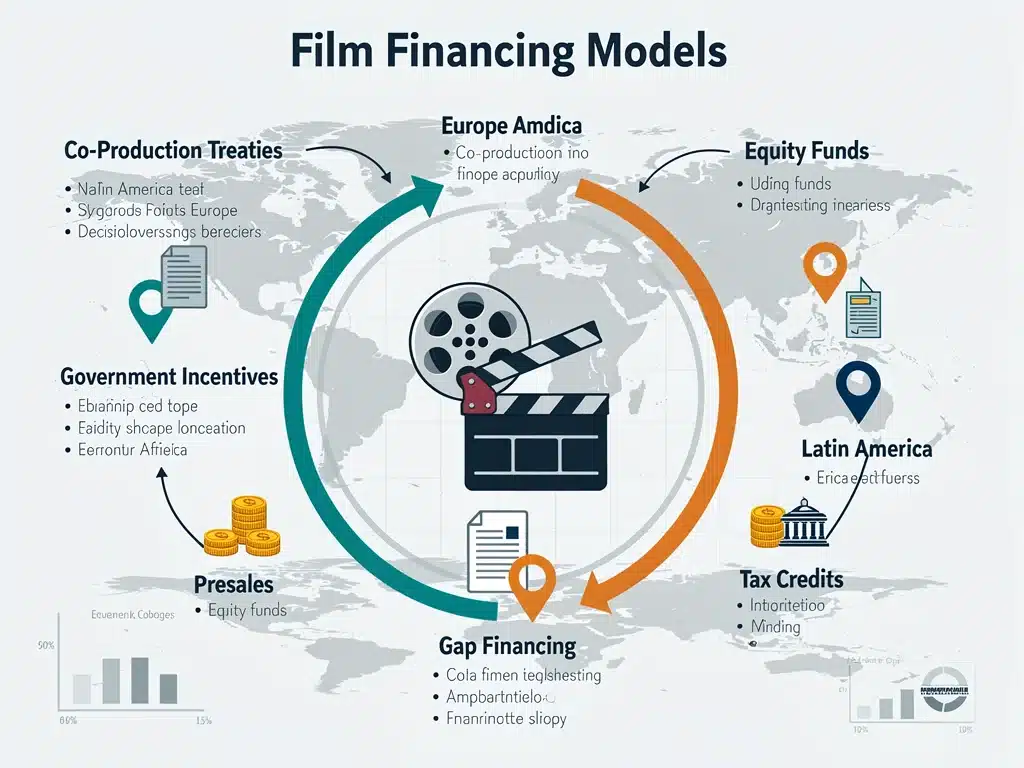
Co-production treaties between the U.S. and various countries streamline the process of combining resources, often qualifying projects for national subsidies and tax incentives.
These treaties reduce financial risks and foster cultural exchange.
Hybrid models, blending traditional equity with crowdfunding and blockchain-based financing, are also gaining traction, particularly for independent projects.
These innovative structures provide flexibility and broader investor participation.
- Bilateral and multilateral co-production treaties
- Government film funds and subsidies in key territories
- Private equity and venture capital from international investors
- Emerging decentralized finance (DeFi) platforms for film
Navigating International Tax Incentives and Rebates
International tax incentives and rebates represent a cornerstone of global film financing, offering significant financial advantages to productions that meet specific criteria.
These programs can substantially reduce overall production costs.
Countries worldwide compete to attract film productions by offering generous schemes, including cash rebates, tax credits, and grants for local spending, employment, and infrastructure use.
U.S. producers must understand the nuances of these incentives.
Careful planning and expert consultation are essential to maximize these benefits, as eligibility requirements and application processes vary widely by jurisdiction.
This directly impacts the viability of Investing in Global Stories: A 2026 Outlook on Independent International Film Financing Opportunities for U.S. Producers.
Top Regions for Production Incentives
Regions like Europe (e.g., UK, France, Germany), Canada, Australia, and parts of Asia (e.g., South Korea, Japan) consistently offer attractive incentives.
These locations often boast world-class facilities and skilled crews.
Latin American countries, such as Colombia and Brazil, are also enhancing their incentive programs, making them increasingly viable options for U.S. producers.
Their diverse landscapes and burgeoning talent pools add further appeal.
- Canada’s robust federal and provincial tax credits
- European Union’s MEDIA program and national film funds
- Australia’s producer offset and location incentives
- Growing incentives in emerging markets like South Africa and New Zealand
The Role of International Sales Agents and Distributors
International sales agents and distributors play a pivotal role in securing upfront financing, particularly through pre-sales agreements, which are crucial for independent films.
Their market expertise is invaluable in assessing a project’s global appeal.
These agents connect producers with international buyers, including theatrical distributors, broadcasters, and streaming platforms, helping to de-risk projects by guaranteeing a portion of the budget.
Their relationships are key to unlocking international revenue streams.
A strong sales agent can also advise on market trends, packaging, and casting, influencing creative decisions to enhance a film’s commercial prospects abroad.
This makes their involvement critical for Investing in Global Stories: A 2026 Outlook on Independent International Film Financing Opportunities for U.S. Producers.
Impact of Streaming Platforms on Global Financing
Streaming platforms have profoundly reshaped the landscape of international film financing, emerging as major financiers and distributors of content.
Their global reach and substantial budgets offer new opportunities for independent producers.
These platforms actively seek diverse, high-quality content that resonates with international audiences, often investing directly in production or acquiring distribution rights for multiple territories.
This provides a stable funding source for many projects.
However, securing deals with streamers often involves relinquishing significant intellectual property rights, a trade-off producers must carefully consider.
The influence of these platforms will only grow, impacting Investing in Global Stories: A 2026 Outlook on Independent International Film Financing Opportunities for U.S. Producers.
Shifting Dynamics with Streamers
The competition among streaming services for exclusive content drives up acquisition prices and production budgets, benefiting producers capable of delivering compelling stories.
This intense demand creates a seller’s market for certain genres and talent.
Streamers are also increasingly commissioning local language content, which opens doors for U.S. producers to partner with international talent and production companies.
This focus on local relevance with global appeal is a key trend.
- Direct investment and commissioning by major streaming services
- Acquisition of global distribution rights
- Emphasis on diverse, local-language content with international appeal
- Negotiating IP retention versus upfront financing
Building Strategic International Partnerships for 2026
Building robust strategic international partnerships is fundamental for U.S. producers aiming to successfully navigate the complexities of global film financing.
These collaborations extend beyond mere financial arrangements to encompass creative and logistical synergy.
Effective partnerships often involve co-development, co-production, and co-distribution agreements that leverage the strengths of each party, sharing risks and maximizing market access.
Trust and mutual understanding are paramount for long-term success.
Identifying reliable and experienced international partners requires thorough due diligence and networking at global film markets and festivals.
This proactive approach is vital for anyone interested in Investing in Global Stories: A 2026 Outlook on Independent International Film Financing Opportunities for U.S. Producers.
Cultivating Cross-Border Relationships
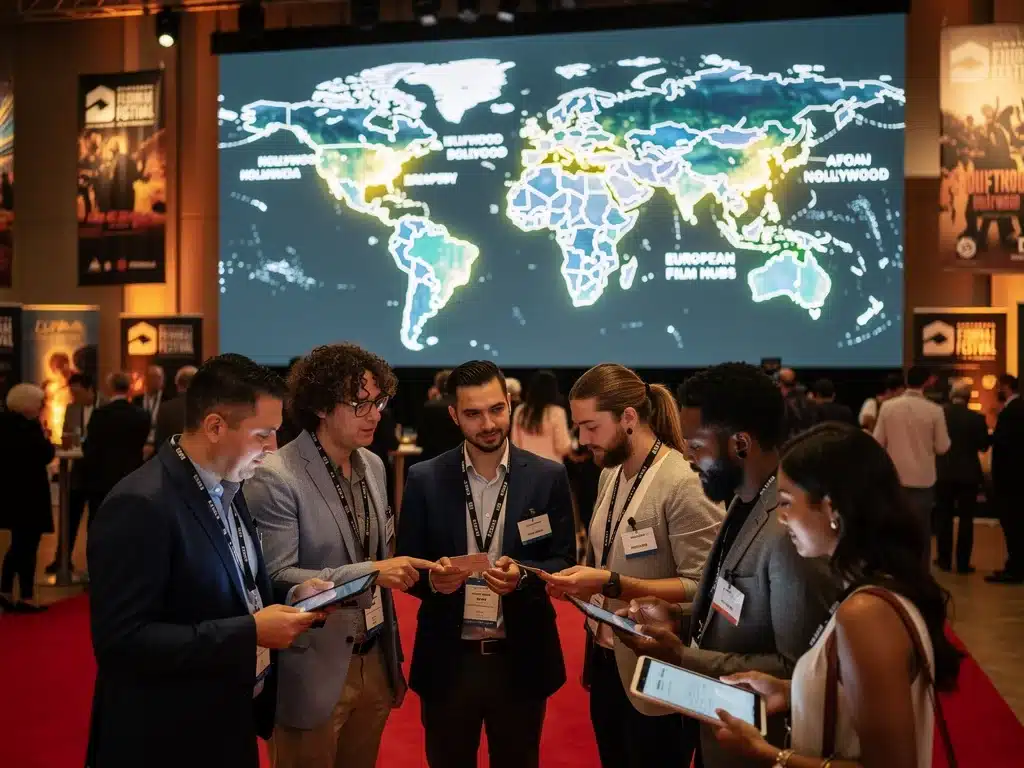
Attending key industry events like the Cannes Film Market, Berlinale Co-Production Market, and AFM allows producers to forge essential connections.
These forums are designed for networking and project pitching to international financiers and partners.
Joining international producer associations and participating in workshops focused on global co-production can also provide invaluable insights and contacts. Continuous engagement builds a strong foundation for future collaborations.
- Active participation in international film festivals and markets
- Engaging with film commissions and cultural agencies abroad
- Collaborating with established international production companies
- Utilizing online platforms for global talent and project matching
Challenges and Risks in International Film Financing
While the opportunities in international film financing are substantial, U.S. producers must also be cognizant of the inherent challenges and risks.
Navigating diverse legal frameworks, cultural differences, and currency fluctuations requires careful strategic planning.
Legal complexities, particularly concerning intellectual property rights, contractual agreements, and tax compliance across different jurisdictions, can be formidable.
Expert legal counsel specializing in international film law is indispensable.
Cultural misunderstandings and communication barriers can also impede production efficiency and creative collaboration, necessitating sensitivity and adaptability from all parties involved.
These factors are crucial when considering Investing in Global Stories: A 2026 Outlook on Independent International Film Financing Opportunities for U.S. Producers.

Future Trends and Outlook for 2026
Looking ahead to 2026, several trends are poised to further shape the landscape of independent international film financing.
The increasing prominence of AI in filmmaking, virtual production techniques, and evolving audience consumption habits will continue to influence investment decisions.
Sustainable production practices are also gaining traction, with investors and audiences increasingly favoring environmentally conscious projects.
This ethical dimension will likely become a prerequisite for certain funding avenues.
The continued growth of emerging markets as both content creators and consumers will open new doors for co-production and distribution, further diversifying the global financing ecosystem.
This dynamic environment emphasizes the importance of a clear Investing in Global Stories: A 2026 Outlook on Independent International Film Financing Opportunities for U.S. Producers.
| Key Point | Brief Description |
|---|---|
| Diversified Funding | U.S. producers increasingly seek international co-productions and alternative financing to mitigate risks. |
| Incentive Programs | Global tax incentives and rebates are crucial for reducing production costs and attracting investment. |
| Streamer Influence | Streaming platforms are major financiers, offering global reach but often requiring IP concessions. |
| Strategic Partnerships | Building strong international relationships is vital for creative collaboration and market access. |
Frequently Asked Questions About International Film Financing
International co-productions offer several key benefits, including access to diverse funding sources, tax incentives, and rebates from partner countries. They also enable producers to tap into global talent pools, expand creative horizons, and reach broader international audiences, ultimately enhancing a project’s financial viability and cultural impact.
Streaming platforms significantly impact independent international film financing by acting as major financiers and global distributors. They provide substantial upfront investments and access to vast audiences, particularly for diverse and local-language content. However, producers must carefully evaluate the trade-offs, often involving intellectual property rights, when engaging with these powerful entities.
International sales agents are crucial in securing film financing, primarily through pre-sales agreements that guarantee a portion of a project’s budget. They leverage their market expertise and global network to connect producers with international buyers, assessing a film’s commercial potential and advising on packaging and casting to maximize its appeal in various territories.
The main risks include navigating complex legal and tax frameworks across different jurisdictions, managing currency fluctuations, and overcoming cultural and communication barriers. Additionally, intellectual property issues and the potential for creative differences with international partners require careful management and expert legal and cultural consultation to mitigate effectively.
In 2026, regions like Canada, the UK, France, Germany, and Australia remain highly attractive due to their well-established and generous tax incentives and rebates. Emerging markets in Latin America and parts of Asia are also increasingly competitive, offering enhanced programs and diverse locations that appeal to U.S. producers seeking global film financing opportunities.
Looking Ahead: Strategic Imperatives for U.S. Producers
The 2026 outlook for Investing in Global Stories: A 2026 Outlook on Independent International Film Financing Opportunities for U.S. Producers underscores the imperative for strategic foresight and adaptability.
U.S. producers must continuously monitor evolving market trends, legislative changes in international jurisdictions, and the dynamic role of streaming platforms.
To better navigate unpredictable market conditions and international market dynamics, explore The Wall Street Journal’s guide on investing during continuous global crises.
Cultivating robust global networks and embracing innovative financing models will be key to unlocking new capital and bringing diverse stories to worldwide audiences in this increasingly interconnected cinematic landscape.
This proactive approach will define success.