Essential Acoustic Setup Tips: Calibrating 5.1 Systems for 80s Lo-Fi Synth Scores
Advertisements
Acoustic setup tips can help home theater enthusiasts reproduce the distinctive atmosphere of 1980s lo-fi synth soundtracks. Speaker placement and calibration are essential starting points.
Vintage electronic scores often feature layered synthesizers, unusual textures, and dramatic bass. A properly configured 5.1 system can reveal these details without unnecessarily changing the recording.
Discover practical ways to adjust speakers, manage room acoustics, configure your receiver, and enjoy the soundtracks associated with classic cult cinema.
Optimizing Speaker Placement for Authentic 80s Sound
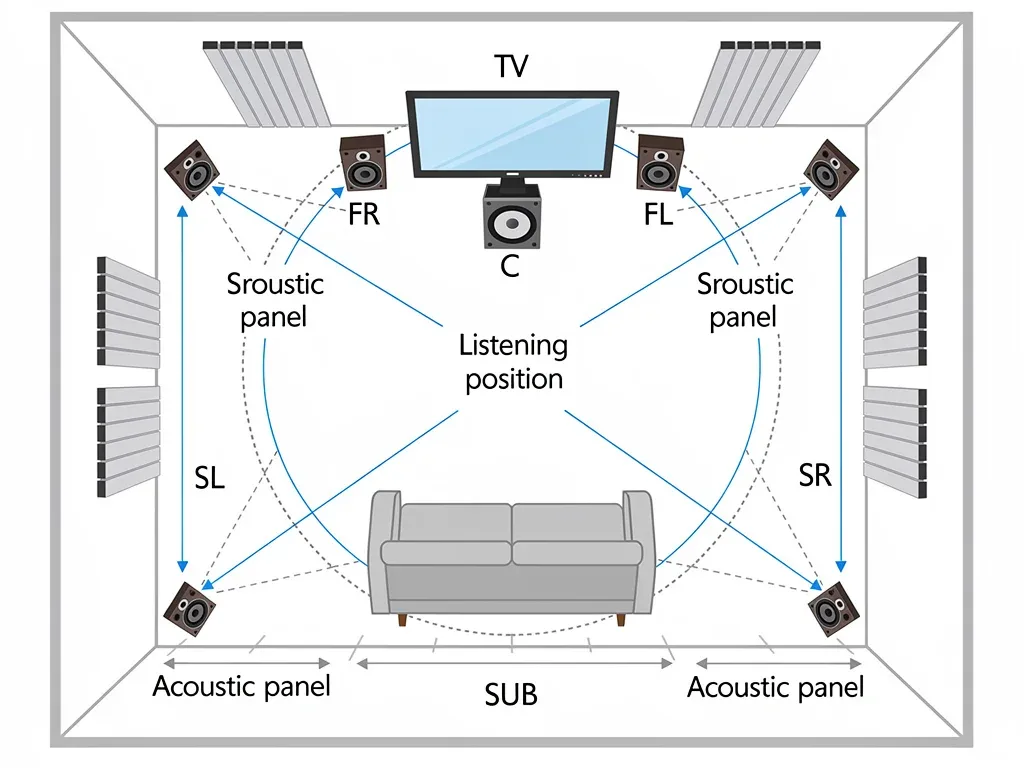
Correct speaker placement provides a foundation for accurate home theater playback. A 5.1 system uses front left, center, front right, two surrounds, and a subwoofer.
Among the most useful acoustic setup tips is positioning each speaker according to the listening area. Proper angles help create a balanced and consistent soundstage.
However, original 1980s soundtracks may have been produced in mono or stereo. Modern surround reproduction should respect the available mix rather than inventing spatial details.
Front and Center Channel Considerations
The front left and right speakers establish the primary stereo soundstage. Positioning them symmetrically around the screen can improve musical balance and imaging.
The center speaker normally handles dialogue and centrally positioned sounds in a discrete surround mix. Its placement should support clear reproduction without obstructing the screen.
These acoustic setup tips are particularly valuable when enjoying synthesizer-heavy soundtracks. Accurate positioning helps preserve musical separation and dialogue intelligibility.
Surround Speaker Positioning for Atmosphere
Surround speakers reproduce information assigned to the rear sound field in a 5.1 mix. Their contribution depends on the soundtrack's original mixing decisions.
When following acoustic setup tips, place surrounds slightly behind and to the sides of the listening position. A typical 5.1 arrangement uses angles near 110 degrees.
Surround speakers are often positioned slightly above seated ear level. Their height and direction should reflect room conditions and the speaker manufacturer's recommendations.
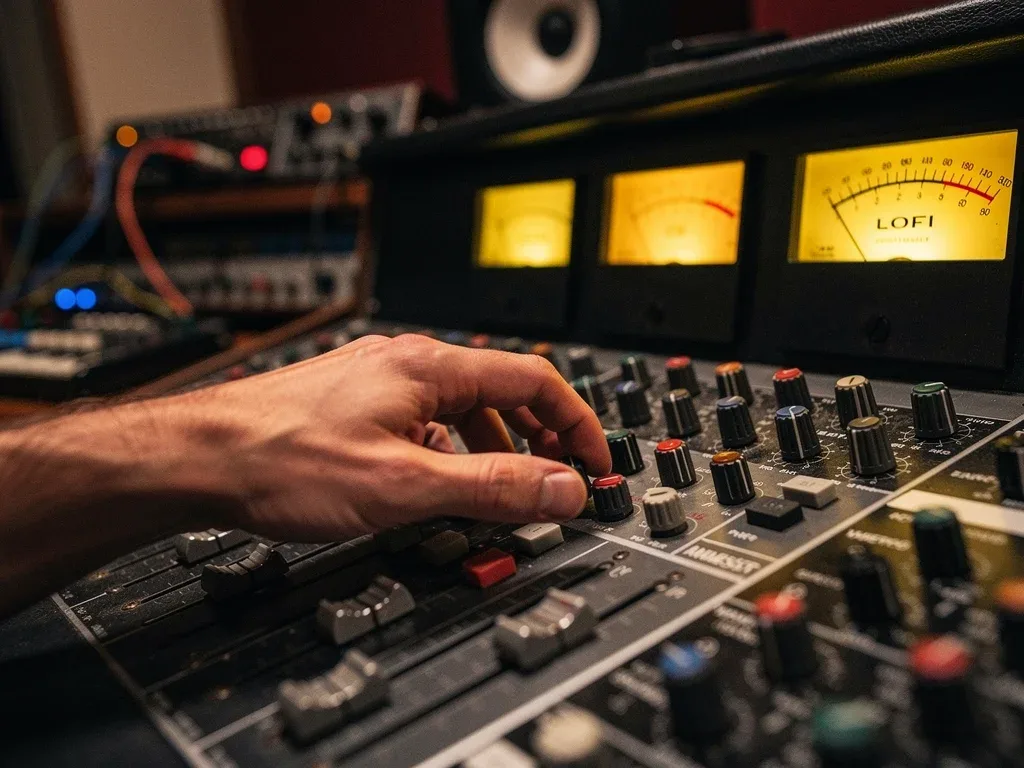
Calibrating Subwoofer for Lo-Fi Bass Impact
The subwoofer reproduces low-frequency information that smaller speakers may struggle to deliver. Vintage electronic scores can contain sustained bass notes and powerful synthesized effects.
Effective acoustic setup tips focus on integrating these frequencies without overwhelming the rest of the soundtrack. Excessive bass can conceal important musical details.
The objective is controlled reproduction of the original recording. Deliberately adding distortion or excessive resonance is not necessary to achieve a vintage atmosphere.
Subwoofer Placement and Room Modes
Subwoofer placement affects how bass frequencies interact with a room. Walls and corners can reinforce certain frequencies while reducing others at the listening position.
One practical technique is the subwoofer crawl. Temporarily place the subwoofer near the listening position and compare bass response at potential installation locations.
These acoustic setup tips can help identify a more balanced position. Measurement tools provide additional accuracy when evaluating low-frequency peaks and cancellations.
Crossover Frequencies and Phase Alignment
The crossover determines which low frequencies are directed toward the subwoofer. A setting near 80 Hz is a common starting point for many home theater systems.
However, suitable crossover settings depend on speaker capabilities and receiver configuration. Small satellite speakers may require a higher crossover frequency.
Among advanced acoustic setup tips, phase alignment is especially important. Correct integration helps avoid unwanted cancellation between the subwoofer and main speakers.
Acoustic Room Treatment for Vintage Fidelity
Room acoustics influence how sound reaches the listener. Reflections, reverberation, and low-frequency resonance can change the perceived character of a soundtrack.
Applying acoustic setup tips to the listening space may improve clarity without requiring expensive audio equipment. Strategic adjustments can address common problems.
For vintage synthesizer music, balanced acoustics help preserve the recording's distinctive textures. Excessive treatment is not always necessary for a satisfying listening experience.
Managing Reflections with Absorption Panels
Sound reflections occur when audio waves bounce from surfaces before reaching the listener. Strong early reflections can affect stereo imaging and clarity.
Acoustic panels can absorb some reflected energy when installed at appropriate locations. Their effectiveness depends on thickness, material, and frequency characteristics.
Practical acoustic setup tips include evaluating reflection points before adding treatment. Rugs, curtains, and furniture may also influence a room's acoustic behavior.
Diffusers and Bass Traps for Sonic Balance
Diffusers scatter reflected sound energy in different directions. Depending on room size and placement, they can help maintain spaciousness while reducing concentrated reflections.
Bass traps are designed to manage low-frequency resonance. They may be useful in rooms where certain synth bass notes sound disproportionately loud.
Combining these acoustic setup tips can create a more balanced environment. Effective treatment should address identified problems rather than follow a fixed decorative arrangement.
Receiver Settings and EQ for Period Accuracy
Modern AV receivers provide tools for speaker calibration, equalization, and sound processing. These features can improve playback when configured appropriately.
Useful acoustic setup tips begin with accurate speaker distances, levels, and bass management. Room correction can help compensate for certain acoustic problems.
Additional sound processing should be evaluated carefully. Preserving the original audio mix is generally preferable to applying dramatic tonal changes without a clear purpose.
Manual EQ Adjustments for Synth Tones
Equalization changes the balance of frequencies reproduced by the system. Small adjustments may improve clarity when the room or equipment produces noticeable coloration.
Some vintage synthesizer recordings emphasize particular midrange or bass frequencies. However, there is no universal EQ curve suitable for every 1980s soundtrack.
When applying acoustic setup tips, begin with neutral settings and make modest changes. Compare familiar recordings to avoid unintentionally altering their character.
Disabling Unnecessary Processing Features
Some receivers include virtual surround, dynamic compression, and additional sound enhancement modes. These features can alter the original recording's spatial and dynamic presentation.
For enthusiasts seeking faithful reproduction, unnecessary processing may be disabled. However, automatic room correction and bass management can remain beneficial.
These acoustic setup tips encourage evaluating each setting individually. Direct listening modes may bypass important calibration features, depending on the receiver model.
Channel Level Matching and Delay Settings
Channel calibration helps create a consistent listening experience across the speaker system. Incorrect volume levels can make dialogue, music, or effects sound unbalanced.
Accurate acoustic setup tips also address speaker distance and timing. Sound from speakers positioned at different distances may require delay compensation.
Most AV receivers provide calibration menus or automatic measurement tools. These systems can establish a useful starting point for additional adjustments.
Matching Channel Levels Accurately
Channel level matching involves adjusting speaker output according to a common reference. Receiver test tones and calibration microphones can help establish consistency.
An SPL meter may also assist with measurements at the main listening position. Follow the receiver manufacturer's recommended test signal and calibration level.
These acoustic setup tips help prevent individual channels from dominating playback. Avoid excessively loud test tones, particularly during extended calibration sessions.
Calculating Speaker Delays and Distances
Distance settings allow an AV receiver to compensate for different speaker positions. Correct timing helps sound from multiple channels reach the listening area coherently.
Measure the distance between each speaker and the primary listening position. Enter the values according to the receiver's setup instructions.
Among technical acoustic setup tips, accurate timing can improve integration and imaging. Automatic calibration may provide additional adjustments for electronic and acoustic delays.
Source Material Quality and Playback
The quality of an audio source significantly influences the final listening experience. Even sophisticated equipment cannot recover information missing from the original recording.
When following acoustic setup tips, consider the source format and soundtrack mix. Many 1980s cult films were originally distributed with mono or stereo audio.
Modern releases may include restored tracks or surround remixes. These versions can sound different, making personal preference and source authenticity important considerations.
Selecting Optimal Audio Formats
Lossless formats such as FLAC and WAV preserve digital audio without perceptual data compression. They can be useful when high-quality soundtrack releases are available.
Compact discs and well-produced digital releases may offer excellent playback quality. Vinyl records provide a different listening experience influenced by mastering and equipment.
These acoustic setup tips emphasize source quality over format reputation. A carefully mastered recording may sound better than a poorly prepared high-resolution release.
Player and DAC Considerations
A digital-to-analog converter transforms digital audio information into an analog signal. AV receivers commonly include DACs designed for multichannel playback.
Digital connections such as HDMI can carry audio to compatible home theater equipment. Optical connections may also be useful, although their supported formats differ.
Following acoustic setup tips does not require purchasing expensive converters automatically. A properly functioning receiver and suitable source can provide satisfying results.
Troubleshooting Common Acoustic Issues
Even carefully configured systems may experience problems with bass, dialogue, or surround balance. Identifying the cause is more effective than changing several settings simultaneously.
Practical acoustic setup tips encourage checking connections, speaker positions, and receiver configurations first. These factors frequently influence playback quality.
Comparing different recordings can also help determine whether a problem comes from the system or the source. Some vintage soundtracks naturally contain recording limitations.
Addressing Muddy Bass and Boomy Sound
Excessive bass resonance may cause certain low frequencies to sound louder than others. Room dimensions and subwoofer placement are common contributing factors.
Try adjusting the subwoofer position or reviewing its crossover and phase settings. Room measurement software can help identify troublesome frequency regions.
These acoustic setup tips may improve low-frequency balance without removing the character of vintage synth bass. Avoid increasing subwoofer volume simply to compensate for uneven response.
Resolving Unclear Dialogue and Weak Surround
Unclear dialogue may result from center speaker placement, low channel levels, or the soundtrack's original mix. Check the speaker's orientation and receiver settings.
Weak surround effects can also reflect limited information in the source. Stereo soundtracks do not contain discrete surround channels unless specifically remixed.
For better results, apply acoustic setup tips gradually and compare playback before and after changes. Avoid artificially increasing channel levels without understanding the cause.
Key Point | Brief Description |
|---|---|
Speaker Placement | Correct positioning supports balanced imaging and accurate multichannel reproduction. |
Subwoofer Calibration | Placement, crossover, and phase adjustments help control low-frequency playback. |
Room Acoustics | Absorption, diffusion, and bass treatment can address unwanted reflections and resonance. |
Receiver Settings | Accurate levels, timing, bass management, and appropriate EQ support consistent playback. |
Frequently Asked Questions About 80s Synth Score Setup
What is the most critical step for an authentic 80s synth score sound?▼
Correct speaker placement and basic calibration provide a strong foundation. Accurate levels, distance settings, and bass integration help reproduce vintage cult scores without unnecessary coloration. The quality and original format of the soundtrack are also important.
Should I use automatic room correction for 1980s lo-fi scores?▼
Automatic room correction can help address certain acoustic problems and establish consistent speaker settings. It does not inherently remove the vintage character of a recording. Evaluate the results and make additional adjustments only when needed.
How important is acoustic room treatment for this type of audio?▼
Acoustic treatment can improve clarity and bass balance by managing reflections and room resonance. Its importance depends on the listening space. Basic improvements may be sufficient for some rooms, while others benefit from specialized panels and bass traps.
What role does the subwoofer play in reproducing 80s synth bass?▼
The subwoofer reproduces low-frequency information within its operating range. Proper placement, crossover configuration, and phase alignment help integrate bass with the main speakers. Good calibration preserves impact without overwhelming other musical elements.
Are there specific receiver settings to prioritize for lo-fi cult synth scores?▼
Prioritize accurate channel levels, speaker distances, and bass management. Avoid unnecessary processing when faithful playback is the goal. Additional information about vintage audio production can be found in this discussion of cult classics sound secrets.
Looking Ahead: The Enduring Appeal of Retro Sound
The continued interest in acoustic setup tips reflects the lasting appeal of vintage electronic soundtracks. Modern audio systems can reveal details that older playback equipment sometimes obscured.
However, faithful reproduction requires respecting the original mix and recording limitations. Exploring the history of 1980s cult classics provides additional context for their distinctive sound.
As enthusiasts revisit cult cinema releases and discover potential future cult classics, thoughtful calibration remains valuable. Balanced playback preserves musical character while improving the home theater experience.