Practical Media Preservation: Protecting Magnetic Tape Cult Curiosities
Advertisements
Magnetic tape preservation is increasingly important as VHS, Betamax, reel-to-reel and other analog formats continue aging beyond their original consumer lifespan.
Heat, humidity, binder deterioration, mold, mechanical damage and obsolete playback equipment can all threaten recordings long before the magnetic signal disappears completely.
For collectors and archives, the strongest strategy combines stable storage, careful inspection, appropriate playback equipment and timely migration into well-managed digital preservation files.
Why Magnetic Tape Preservation Matters
Magnetic tape preserved an enormous range of films, television recordings, music, interviews, performances and independent productions throughout the twentieth century.
Many uncommon recordings survive only on consumer or professional tape formats that now depend on aging media and increasingly scarce playback equipment.
Preserving the content therefore requires protecting both the physical carrier and the ability to reproduce it accurately before either becomes unusable.
Age Alone Does Not Determine Tape Condition
Two tapes manufactured in the same decade can age very differently depending on formulation, storage history, handling and environmental exposure.
A well-stored recording may remain playable while another copy exposed to heat or moisture can develop mold, binder problems or physical deformation.
Condition assessment should therefore focus on the individual tape rather than assuming that every thirty-year-old cassette requires the same intervention.
Understanding How Magnetic Tape Is Constructed
Magnetic tape generally combines a flexible base film with magnetic particles held to that base by a binder system.
Additional coatings may reduce friction or improve performance, while the tape is wound onto reels or enclosed within a cassette housing.
Each component can age differently, making deterioration a combination of chemical, mechanical and environmental processes rather than one single failure mode.
The Magnetic Layer Stores the Recording
Recorded information is represented by magnetic patterns that a properly aligned playback head reads as the tape passes across it.
Good contact between the tape and playback head is important because physical deformation, contamination or shedding can interfere with signal recovery.
This is why preservation involves maintaining both the recorded layer and the mechanical condition needed to reproduce it safely.
Sticky-Shed Syndrome Is a Specific Preservation Problem
Sticky-shed syndrome is associated particularly with certain analog audio and video tapes manufactured using polyester-urethane binder formulations beginning in the 1970s.
When affected tape becomes sticky, it can deposit residue on guides and playback heads, increasing friction and potentially interrupting reproduction.
The problem should not be assumed merely from age because different tape formulations have different deterioration mechanisms and levels of susceptibility.
Do Not Force a Sticky Tape Through a Machine
A tape that squeals, sticks, stops transport or leaves visible residue during playback should not simply be forced to continue running.
Continued playback can contaminate equipment and may damage the recorded surface, reducing the chance of recovering the content successfully later.
Valuable or irreplaceable material showing these symptoms should be evaluated before another playback attempt is made.
Baking Is Not a Permanent Repair
Controlled thermal treatment is sometimes used by preservation specialists to make certain sticky-shed tapes temporarily playable for transfer.
Library of Congress research shows that commonly cited treatments involve carefully controlled temperatures around 54°C, or approximately 130°F, for appropriate tape formulations.
The treatment does not permanently reverse aging, and sticky behavior can return, making prompt digitization the objective once successful playback becomes possible.
Home Ovens Are Not Appropriate Preservation Equipment
Thermal treatment requires stable temperatures and controlled air circulation, conditions that ordinary household ovens are not designed to provide safely.
Different cassette shells, adhesives and tape formulations can also react differently to heat, creating additional risk when the format is not properly identified.
Collectors should treat baking as a specialized recovery procedure rather than a routine maintenance technique for every aging magnetic tape.
Mold Requires Special Care
High relative humidity can encourage fungal growth on magnetic media, particularly when tapes remain in damp environments for extended periods.
Visible fuzzy growth or suspicious deposits should be taken seriously because mold can damage media and release spores during handling or playback.
The National Archives recommends consulting an audiovisual preservation specialist when magnetic materials show visible mold or similar contamination.
Do Not Play Moldy Tape Before Assessment
Running a contaminated tape through a VCR or tape deck can spread spores and debris through the transport mechanism and onto other recordings.
Cleaning methods depend on the tape format, severity of contamination and physical condition of the recording surface and enclosure.
For rare recordings, isolating the item and obtaining professional guidance is safer than aggressive household cleaning methods.
Storage Conditions Can Slow Deterioration
Temperature and relative humidity strongly influence chemical deterioration, mold risk and dimensional changes in magnetic recording materials.
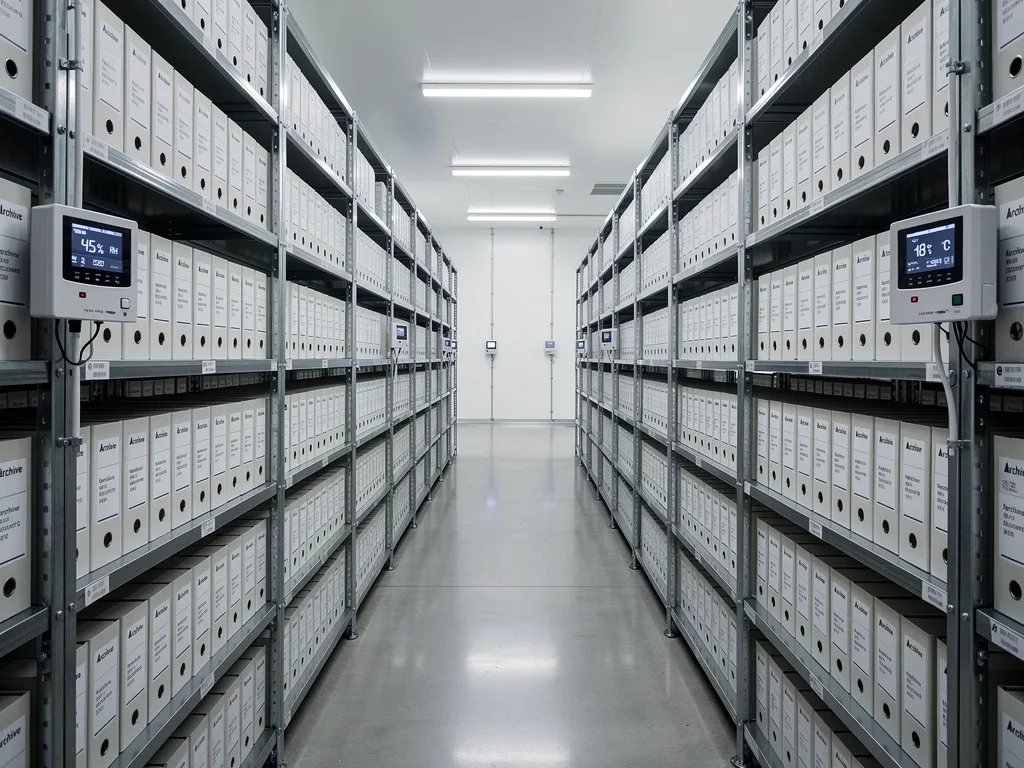
For magnetic media, the National Archives recommends cool conditions and commonly cites approximately 50–65°F with 30–40% relative humidity for preservation storage.
Stability matters alongside the numerical target because repeated environmental swings can place additional stress on recording materials and their enclosures.
Home Collections Need Practical Conditions
For ordinary home video collections, National Archives guidance describes approximately 55–70°F and 30–55% relative humidity as a practical storage range.
A cool interior closet or climate-controlled room is usually preferable to an attic, garage or damp basement where conditions fluctuate sharply.
The best realistic location is one that remains consistently cool, dry, clean and protected from water leaks or flooding.
Store Magnetic Tapes Vertically
Videotapes and similar cassette formats should generally be stored upright in their protective cases rather than stacked horizontally for long periods.
Vertical storage helps support the cassette or reel properly while protecting it from dust and unnecessary pressure from other objects.
Shelving should also keep recordings away from floors where leaks, pests or accidental impact could cause substantial damage.
Protect Tapes From Strong Magnetic Fields
Magnetic recordings should not be stored directly beside equipment capable of producing strong electromagnetic fields that could affect recorded information.
National Archives guidance specifically advises separation from strong magnets, loudspeakers, high-voltage equipment and similar sources.
Ordinary household electronics do not automatically erase tapes at a distance, but avoiding unnecessary strong-field exposure remains sensible preservation practice.
Light, Dust and Contamination Also Matter
Magnetic media should be protected from direct sunlight, excessive dust, smoke and other contaminants that can damage enclosures or interfere with playback.
Dust entering a cassette or reel can become trapped along the tape path and interfere with proper contact between the recording surface and playback head.
Protective cases provide a simple first barrier, making them valuable even when recordings are already stored inside cabinets or archival shelving.
Original Cases Can Still Be Useful
A clean original cassette case often provides adequate basic physical protection when it remains structurally sound and free from mold or contamination.
Damaged or dirty enclosures can be replaced with suitable inert cases while retaining labels and documentation associated with the recording.
Preservation should prioritize protecting the tape without unnecessarily discarding contextual information that helps identify its history and contents.
Handle Tape Surfaces as Little as Possible
Magnetic recording surfaces should not be touched unnecessarily because skin oils, dirt and physical pressure can contaminate or damage vulnerable areas.
Open-reel tape should be handled by reels, hubs or appropriate edges, while cassettes should normally remain closed unless professional servicing is required.
Clean hands and a clean workspace are often more important than introducing unnecessary handling during routine inspection.
Gloves Are Not Always the Main Protection
Gloves can be useful for certain preservation tasks, but poor dexterity can also increase the risk of dropping or mishandling fragile audiovisual materials.
The key principle is avoiding direct contact with the recording surface and preventing dirt, oils or contaminants from entering the tape path.
For delicate restoration work, the handling method should follow the requirements of the specific format and preservation procedure being performed.
Playback Equipment Is Part of the Preservation Chain
A healthy tape can still be damaged by a machine with dirty guides, hardened rollers, alignment problems or defective transport components.
Before transferring important material, playback equipment should be inspected and maintained by someone familiar with the particular format.
Scarcity of functional machines makes equipment preservation almost as important as preservation of the recordings themselves.
Do Not Demagnetize Equipment Without Understanding It
Older preservation advice sometimes recommends routine head demagnetization, but careless use of a demagnetizer can create its own risks.
Modern or unfamiliar playback equipment should not be subjected to magnetic servicing procedures unless the manufacturer's guidance and equipment design support them.
Cleaning and maintenance should therefore follow format-specific technical procedures rather than one universal checklist for every tape machine.
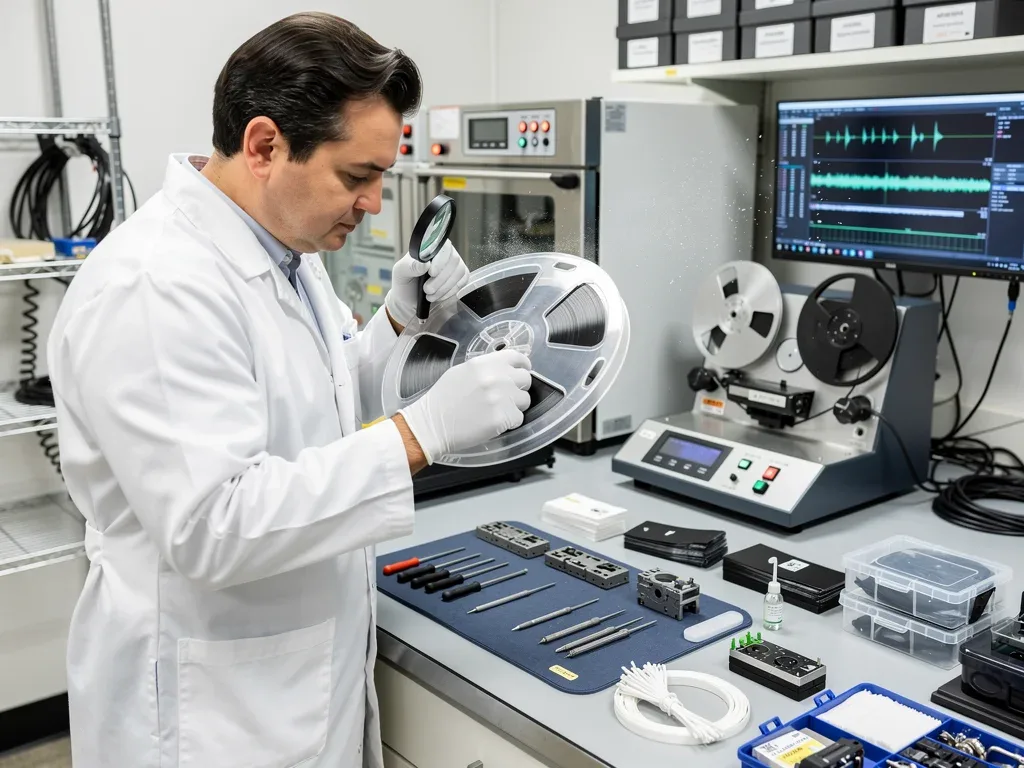
Inspect Before Every Important Playback
A brief visual inspection can reveal damaged shells, loose tape packs, visible contamination, mold or other warning signs before equipment is engaged.
For open reels, uneven winding or damaged edges may indicate that transport should be handled cautiously by an experienced technician.
Stopping before playback is far better than discovering a serious preservation problem after the tape has already been pulled through the machine.
Prioritize Irreplaceable Recordings
Collections containing hundreds of tapes rarely need to be digitized in arbitrary order simply because one cassette happens to be easiest to reach.
Unique material, visibly deteriorating tapes and formats with disappearing playback equipment deserve higher priority than commercially available duplicated recordings.
A preservation inventory can help collectors allocate limited time and money toward recordings carrying the greatest risk of permanent loss.
Digitization Preserves Content, Not the Original Carrier
Digitization transfers the recorded signal into a digital environment where it can be copied, monitored and accessed without repeatedly playing the original tape.
This greatly reduces dependence on fragile analog media, but it does not make the original physical recording itself permanent or immune to deterioration.
The best strategy is often preserving the original under stable conditions while maintaining properly managed digital preservation copies.
Digitization Quality Depends on Playback Quality
A high-resolution digital file cannot recover information that poor alignment, dirty heads or defective playback equipment failed to reproduce correctly during transfer.
Professional preservation therefore treats the playback chain as part of the digitization process rather than focusing only on the computer or converter.
Correct machine selection, calibration and monitoring can matter more than simply choosing the largest possible digital file size.
Choose Preservation Formats by Media Type
Audio and video require different preservation approaches, so a single list containing WAV, TIFF and ProRes should not imply that the formats are interchangeable.
For digital audio preservation, uncompressed Broadcast Wave files are widely used because they retain PCM audio while supporting preservation-oriented metadata.
Video preservation can use appropriate lossless or high-quality preservation codecs and containers depending on institutional resources and workflow requirements.
WAV Is Appropriate for Audio, Not Video
The Library of Congress has transferred audio collections into high-resolution Broadcast WAV files, including 96 kHz and 24-bit preservation audio workflows.
Video requires different encoding and container choices capable of representing moving images, audio tracks, timing and technical metadata together.
Collectors should therefore select preservation formats according to the source recording rather than following a generic list of “archival file types.”
Digital Files Also Need Preservation
Digitization only transfers the preservation problem from an aging analog carrier into a digital storage environment requiring continued management.
Hard drives fail, file systems become corrupted and storage formats eventually become obsolete if digital collections are simply copied once and forgotten.
Long-term preservation requires redundancy, integrity checking, documentation and periodic migration into maintained storage systems.
Keep More Than One Copy
A preservation master should exist in multiple independent copies so failure of one drive or device does not destroy the only surviving transfer.
Copies should ideally exist on different storage systems and, when possible, at separate physical locations to reduce disaster risk.
Cloud storage can be one component of this strategy, but it should not automatically become the sole preservation copy.
Checksums Help Detect Digital Corruption
A checksum is a calculated value that can later be recomputed to verify whether a digital preservation file has changed unexpectedly.
Regular fixity checks can reveal corruption before damaged files silently replace healthy copies across an entire backup system.
This practice turns digital preservation into an active monitoring process instead of assuming that files remain correct simply because they still open.
Metadata Preserves Context
A digital file without information about its source, date, format and transfer process may become difficult to understand decades later.
Preservation metadata can document the original carrier, playback machine, capture settings, date of digitization and any restoration applied during transfer.
Descriptive information should also identify people, productions and dates when known so future users understand what the recording contains.
Do Not Dispose of Originals Immediately After Digitization
A digital transfer can contain mistakes that remain unnoticed until the recording is reviewed carefully or better playback equipment becomes available later.
The physical original can therefore remain the authoritative source even after a high-quality preservation master has been created.
When practical, retain unique original tapes under stable conditions unless a documented collection policy provides a compelling reason for disposal.
Originals Can Support Future Re-Transfers
Transfer technology, restoration methods and knowledge of historical formats can improve, allowing later archivists to obtain better results from surviving originals.
A poorly aligned first transfer should not become the permanent version simply because the source tape was discarded immediately afterward.
Keeping the carrier provides an opportunity to correct mistakes and benefit from future preservation techniques when the material remains physically stable enough.
Cult and Independent Recordings Can Be Unusually Vulnerable
Independent films, regional broadcasts, underground performances and fan-distributed recordings were often duplicated in small numbers on consumer magnetic formats.
Unlike major studio releases, some never received later commercial reissues or professionally maintained archival masters.
For these works, one surviving VHS or similar tape can carry cultural information that exists nowhere else in accessible form.
Context Can Be as Valuable as the Recording
Handwritten labels, sleeves, advertisements and notes can reveal where a tape circulated and how audiences originally encountered its content.
Discarding that material during digitization can remove historical evidence even when the audiovisual signal itself survives successfully.
Collectors interested in cult curiosities should preserve this contextual material alongside the media whenever possible.
Build an Inventory Before Starting a Large Project
A simple spreadsheet or database can document each recording's format, label information, condition, content and preservation priority.
Assigning unique identifiers prevents confusion when cases, digital files and original media become separated during a large transfer project.
An inventory also makes it easier to estimate how much playback equipment, storage capacity and professional assistance the collection will require.
Document Condition Consistently
Use repeatable descriptions such as good, damaged shell, mold suspected, sticky, broken tape or unknown condition rather than inconsistent informal notes.
Photographs of labels and unusual damage can supplement written records without repeatedly handling the same tape during later planning.
Items with visible deterioration should be separated and prioritized according to both preservation risk and uniqueness of their content.
Professional Help Is Worth Considering for Rare Material
Home digitization can be appropriate for stable tapes when reliable equipment and careful procedures are available to the collector.
Rare, deteriorated or technically unusual recordings may justify professional transfer because a failed first playback can cause irreversible damage.
A reputable preservation service should be able to explain its playback equipment, transfer workflow, file formats and treatment of originals clearly.
Ask What Files You Will Receive
Some consumer transfer companies deliver only compressed viewing files, which may be convenient but unsuitable as the sole archival master.
Before sending valuable tapes, ask whether the service can supply higher-quality preservation files alongside smaller access copies for normal viewing.
Also confirm whether restoration is performed automatically, because aggressive noise reduction or image processing can alter the original recording significantly.
Prepare for Equipment Obsolescence
Magnetic tape preservation is increasingly constrained by aging playback machines that are no longer manufactured in large numbers or easily serviced.
Replacement heads, belts, rollers and specialized electronic components can become harder to find even while surviving tapes remain physically playable.
This makes timely transfer important because preservation depends on both the condition of the recording and continued access to functioning equipment.
The Playback Window Can Close Before the Tape Fails
A tape may remain chemically stable but effectively become inaccessible when compatible machines and experienced technicians disappear from the market.
Professional archives therefore consider technological obsolescence alongside physical deterioration when deciding which formats require urgent migration.
Collectors should apply the same logic to unusual formats instead of waiting for obvious tape decay before planning digitization.
Create a Disaster Plan for Important Collections
Flooding, fire, leaks and severe humidity excursions can damage an entire tape collection far more quickly than normal aging.
Storage should keep recordings off the floor and away from plumbing, windows or other obvious sources of environmental risk.
A collection inventory and off-site digital copies can greatly improve recovery options after a localized disaster.
Wet or Mold-Damaged Tapes Need Rapid Assessment
Water exposure can encourage mold and contamination, but improper drying or immediate playback can compound the original damage.
Large or valuable collections affected by a disaster should be stabilized and assessed using professional audiovisual conservation guidance.
The priority is preventing additional deterioration while preserving as many recovery options as possible rather than attempting rushed playback.
Magnetic Tape Preservation Priorities
A practical magnetic tape preservation program begins by identifying unique recordings, unstable items and formats facing rapid equipment obsolescence.
Stable storage can buy time, but preservation ultimately requires transferring important content while compatible playback technology still exists.
Digital masters must then receive the same disciplined attention to redundancy, documentation and integrity that physical archives require.
A Simple Preservation Order
First, inventory the collection and isolate tapes with mold, obvious physical damage or signs of binder deterioration before attempting playback.
Second, stabilize storage and prioritize unique or endangered material for careful transfer using appropriate machines and preservation settings.
Third, preserve digital masters redundantly while retaining originals whenever practical for future verification or improved re-transfer.
Preservation Area | Recommended Approach |
|---|---|
Storage | Keep tapes cool, dry, stable, upright and protected from water, dust and strong magnetic fields. |
Sticky-Shed | Stop playback and seek format-appropriate assessment; controlled thermal treatment may help certain formulations temporarily. |
Mold | Isolate affected media and avoid contaminating playback equipment or other recordings. |
Digitization | Create high-quality preservation masters using maintained and correctly aligned playback equipment. |
Digital Preservation | Maintain redundant copies, metadata, checksums and a plan for future storage migration. |
Frequently Asked Questions About Magnetic Tape Preservation
What is sticky-shed syndrome?
It is a deterioration problem associated especially with certain polyester-urethane binder formulations that can make tape sticky and leave residue during playback.
Should I bake every old magnetic tape before digitizing it?
No. Baking is appropriate only for specific deterioration problems and tape formulations and should not be used routinely on every aging tape.
Can I bake a tape in a household oven?
That is not recommended. Controlled thermal remediation requires appropriate temperature stability, circulation and knowledge of the tape's construction and condition.
What temperature is best for storing magnetic tape?
Cool, stable storage is preferred. NARA commonly recommends about 50–65°F and 30–40% RH for magnetic preservation environments.
Should VHS tapes be stored flat?
No. National Archives guidance recommends storing videotapes vertically in their cases rather than stacking them horizontally.
Can strong magnets damage a recording?
Yes. Magnetic media should be kept away from strong magnetic fields produced by magnets and certain electrical or audio equipment.
Is digitization enough to preserve the recording forever?
No. Digital files also require multiple copies, integrity monitoring, metadata and periodic migration as storage systems age or become obsolete.
What format should I use for archival audio?
Uncompressed Broadcast WAV is widely used for preservation audio, while video requires different preservation codecs and containers suited to moving images.
Should I throw away the tape after digitizing it?
For unique material, retaining the original is usually valuable because future equipment or methods may permit a better transfer later.
Why prioritize rare cult recordings?
Some independent or cult recordings may survive in very few copies, making loss of one tape potentially significant to cultural history.
Conclusion
Magnetic tape preservation works best when collectors act before obvious failure, combining environmental stability, safe handling and careful assessment before playback.
Digitization protects access to vulnerable recordings, but preservation continues afterward through redundant storage, metadata, checksums and responsible management of digital masters.
For irreplaceable tapes, the goal is not simply making a playable file today but protecting both the original artifact and its recorded content for future use.