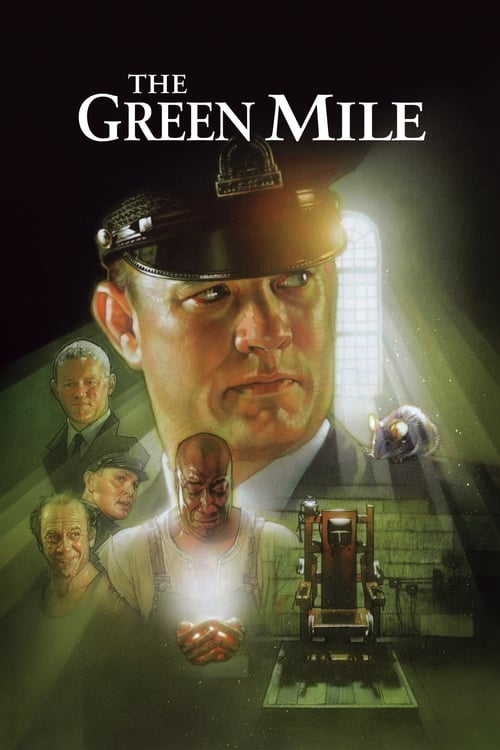
The Green Mile
A supernatural tale set on death row in a Southern prison, where gentle giant John Coffey possesses the mysterious power to heal people’s ailments. When the cell block’s head guard, Paul Edgecomb, recognizes Coffey’s miraculous gift, he tries desperately to help stave off the condemned man’s execution.







Where to watch


CINEMABOXD.COM Review
Frank Darabont’s "The Green Mile" is a cinematic paradox, a sprawling, nearly three-and-a-half-hour meditation on life, death, and the nature of miracles, set against the grim backdrop of a 1930s death row. It's a film that demands your patience, and for the most part, rewards it with a narrative tapestry woven from threads of profound injustice and ethereal grace.
Darabont, adapting Stephen King, understands the delicate balance between the mundane cruelty of the prison system and the extraordinary intervention of the supernatural. His direction is unhurried, allowing the oppressive atmosphere of the E Block to seep into the viewer's bones before introducing the ethereal presence of John Coffey. Michael Clarke Duncan’s performance as Coffey is the film’s undeniable anchor; his gentle giant is not merely a character, but a spiritual conduit, his sorrowful eyes conveying a universe of pain and compassion without uttering a single profound word. Tom Hanks, as Paul Edgecomb, grounds the narrative with his trademark sincerity, a man wrestling with his conscience in a system designed to crush it. The ensemble cast, particularly David Morse as Brutus Howell and the chillingly effective Doug Hutchison as Percy Wetmore, are meticulously cast, each etching a memorable, if not always pleasant, impression.
Yet, despite its emotional gravitas, "The Green Mile" occasionally stumbles under the weight of its own sentimentality. While the fantastical elements are integral, Darabont sometimes leans too heavily into the overt symbolism, bordering on the saccharine. The film's primary weakness lies in its occasionally heavy-handed approach to good versus evil, painting some characters in broad, almost cartoonish strokes. Percy Wetmore, while effectively loathsome, sometimes feels less like a complex human and more like a narrative device for pure villainy. This occasionally detracts from the nuanced moral dilemmas the film attempts to explore, simplifying what could have been a more challenging ethical landscape.
Ultimately, "The Green Mile" is a powerful, if imperfect, piece of cinematic art. It uses the confines of a death row to explore the boundless depths of human cruelty and kindness, asking us to confront our own definitions of justice and faith. It’s a film that lingers, not just for its magical realism, but for its quiet, persistent questioning of what it means to be truly humane. A worthy, if sometimes emotionally manipulative, journey into the heart of darkness and light.