The Impact of Recent U.S. Content Regulations on International Film Exhibition: What You Need to Know for 2026
Advertisements
Are your global film projects truly ready for the American screen this year? As major shifts sweep through US Content Regulations, filmmakers and distributors worldwide are facing a brand-new playbook for showcasing their work across the pond.
Navigating these updated compliance standards isn’t just a legal necessity, it directly impacts your project’s funding, festival eligibility, and theatrical release.
Whether you are producing an indie drama or managing global distribution, staying ahead of North American distribution frameworks is crucial to protecting your audience reach.
Here is your essential guide to what actually changed, why these policy shifts matter to foreign creators, and what actions you should take right now. Dive in to ensure your next cinematic release crosses borders without hitting a regulatory wall.
Understanding the New Regulatory Framework for 2026
The U.S. government has recently introduced a series of content regulations that are poised to significantly alter the international film exhibition landscape by 2026.
These regulations, stemming from various legislative and administrative actions, aim to address issues ranging from intellectual property protection to market access and cultural representation.
Key among these are provisions that could affect co-production agreements, digital distribution rights, and the overall flow of U.S.-produced content into foreign markets, as well as the entry of international films into the U.S. market.
The specifics of these rules are still being finalized, but their direction is clear: a more controlled and potentially more complex environment for cross-border film transactions.
Industry analysts and legal experts are currently dissecting the finer points of these regulations, predicting a ripple effect across the entire global film ecosystem.
Stakeholders are urged to prepare for a new era of compliance and strategic adaptation, especially concerning the exhibition of films originating from or destined for the United States.
Direct Impact on International Film Distribution Channels
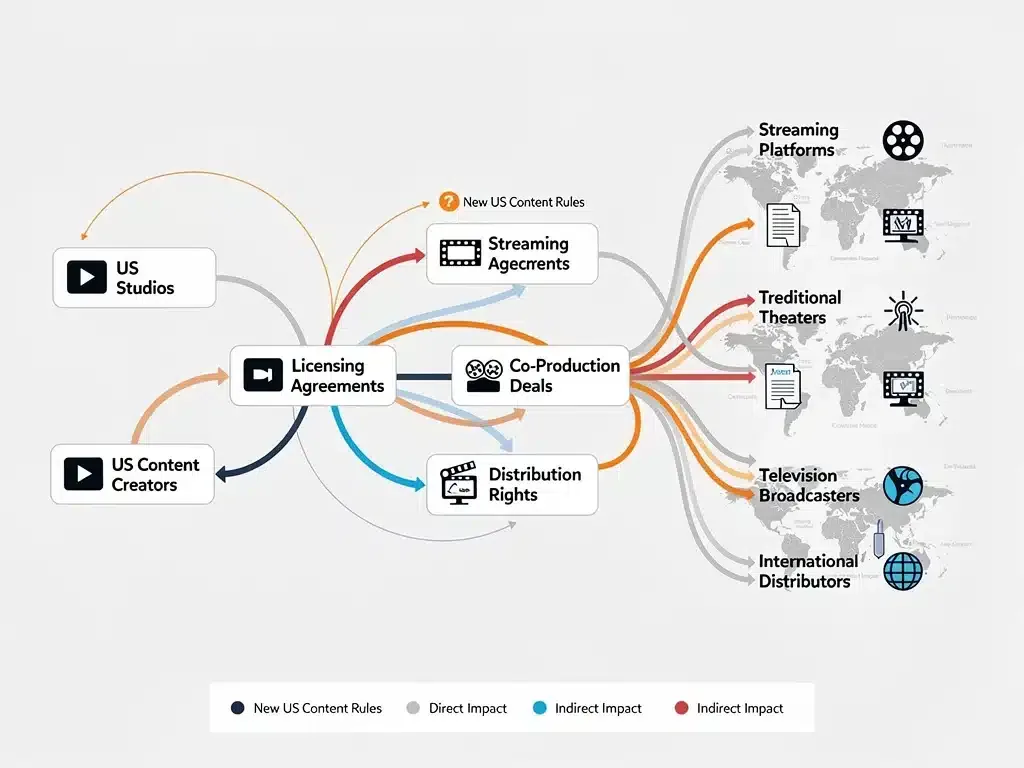
The immediate consequence of these new U.S. content regulations will be felt most acutely in international film distribution.
Distributors who rely heavily on U.S. content for their foreign markets, or those aiming to bring international films into the U.S., will face revised terms and potentially stricter compliance requirements.
This could necessitate significant overhauls in existing distribution models, leading to increased legal costs and administrative burdens.
Furthermore, the regulations might influence the types of content favored by U.S. distributors, potentially impacting the diversity of films available to international audiences.
For independent filmmakers and smaller distribution houses, navigating these new complexities could pose substantial challenges.
Access to U.S. markets, a crucial revenue stream for many, may become more difficult without proper legal guidance and strategic planning to address the new regulatory environment.
Changes in Co-Production and Financing Structures
Co-production agreements, a cornerstone of international film financing, are likely to undergo significant changes.
The new regulations could introduce stricter requirements for how U.S. entities can partner with foreign production companies, particularly concerning content ownership and revenue sharing.
This may lead to a re-evaluation of current co-production strategies, with some international partners seeking alternative financing models or looking towards non-U.S. markets for primary distribution.
The goal is to mitigate potential risks associated with the evolving U.S. regulatory landscape.
- Stricter intellectual property clauses in co-production contracts.
- Increased scrutiny on foreign ownership stakes in U.S.-backed projects.
- Potential shifts in tax incentives for international co-productions involving U.S. partners.
Financiers, too, are adjusting their portfolios to account for these regulatory shifts. Investment in projects with strong U.S. ties now carries an added layer of complexity, requiring careful due diligence to ensure compliance and minimize financial exposure.
Challenges for Global Streaming Platforms and Exhibitors
Global streaming platforms, which have revolutionized film exhibition, are not immune to the effects of the new U.S. content regulations.
These platforms often operate across multiple jurisdictions, and U.S. rules can have extraterritorial implications, especially for content licensed from U.S. rights holders or produced by U.S.-based companies.
The regulations could mandate specific content labeling, regional restrictions, or even quotas for certain types of content, impacting how platforms curate and deliver films to their global subscriber base.
This adds another layer of complexity to an already intricate web of international content agreements.
Traditional cinema exhibitors outside the U.S. will also face challenges, particularly those that heavily program U.S. blockbusters or rely on U.S. film festivals for acquisitions.
Licensing terms and import procedures could become more stringent, affecting release schedules and the overall availability of U.S. films in their territories.
Navigating Compliance and Market Access
Ensuring compliance with these new U.S. content regulations will be a top priority for all involved in international film exhibition. This involves not only understanding the legal text but also anticipating how enforcement agencies will interpret and apply these rules.
Market access, particularly for non-U.S. films seeking entry into the lucrative American market, could become more challenging.
Filmmakers and distributors will need to demonstrate adherence to U.S. standards, which may include new cultural sensitivity guidelines or technical specifications.
- Developing robust internal compliance protocols for content acquisition.
- Investing in legal counsel specializing in international media law.
- Engaging with U.S. industry bodies to stay informed on regulatory interpretations.
The competitive landscape will undoubtedly shift, favoring those entities that can adapt quickly and efficiently to the new regulatory environment. Proactive engagement with U.S. authorities and industry associations will be crucial for maintaining market presence.
Potential Shifts in Content Creation and Storytelling
Beyond distribution and exhibition, the new U.S. content regulations could subtly influence content creation itself.
Producers and screenwriters might increasingly consider the regulatory implications during the development phase, especially if their projects aim for significant U.S. market penetration or involve U.S. financing.
This could manifest in a greater emphasis on themes or narratives that align with perceived U.S. regulatory preferences, or a cautious approach to content that might trigger compliance issues. While creative freedom remains paramount, commercial viability often dictates production decisions.
Conversely, some international filmmakers might intentionally pivot towards projects that are less reliant on U.S. market access, fostering a more diverse range of storytelling outside the direct influence of U.S. regulations.
This could lead to a renaissance in regional cinema, catering to local and pan-regional audiences without the added burden of U.S. compliance.
Opportunities for Adaptation and Innovation
While the new U.S. content regulations present significant hurdles, they also create opportunities for adaptation and innovation within the international film sector. Companies that can swiftly re-engineer their strategies to meet the new demands will gain a competitive advantage.
This might involve developing new technological solutions for content management and distribution that are compliant with U.S. standards, or forging new strategic alliances with partners who possess expertise in navigating complex regulatory frameworks. The focus will shift towards agility and foresight.
Furthermore, the emphasis on compliance could spur innovation in legal tech and AI-powered solutions designed to streamline regulatory adherence.
This could ultimately lead to more efficient and transparent processes across the international film supply chain, benefiting all stakeholders in the long run.
Emerging Markets and Regional Focus
The evolving regulatory landscape might encourage international film entities to strengthen their focus on emerging markets and regional collaborations. Reducing dependence on the U.S. market could become a strategic imperative for long-term sustainability.
Investment in local talent, local language content, and localized distribution strategies could see a significant boost. This decentralization of focus could foster stronger regional film industries and promote greater cultural exchange without the direct oversight of U.S. content regulations.
- Increased funding for regional film initiatives and festivals.
- Development of new distribution networks bypassing traditional U.S. channels.
- Greater emphasis on cultural distinctiveness in content creation for local appeal.
The shift towards a more regionalized approach could also mitigate the risks associated with geopolitical tensions and trade disputes, providing a more stable environment for film production and exhibition in various parts of the world.
Preparing for the 2026 Deadline: Key Strategies
With 2026 fast approaching, film industry players must adopt proactive strategies to prepare for the full implementation of these U.S. content regulations. This includes conducting thorough internal audits of current practices and identifying areas that require adjustment.
Establishing clear lines of communication with legal counsel and industry associations is crucial for staying updated on regulatory interpretations and best practices.
Sharing information and collaborating with peers can also help in developing collective solutions to common challenges.
Finally, developing contingency plans for various regulatory scenarios will be essential. The ability to pivot quickly in response to unforeseen challenges or opportunities will be a hallmark of successful adaptation in this new era of international film exhibition.
Long-Term Implications for Global Cinema
The long-term implications of these U.S. content regulations extend far beyond immediate compliance. They could fundamentally reshape the power dynamics within the global film industry, potentially leading to a more fragmented yet diverse international market.
While U.S. content will undoubtedly remain influential, its dominance might be tempered by the rise of other regional cinematic powerhouses, bolstered by policies that prioritize local content and independent distribution. This could foster a richer tapestry of global storytelling.
Ultimately, the effectiveness and impact of these regulations will depend on their enforcement, the industry’s capacity for adaptation, and the ongoing dialogue between governments and stakeholders.
The global cinema landscape of 2026 and beyond will be a testament to these evolving dynamics.
| Key Aspect | Description of Impact |
|---|---|
| Distribution Models | Revised terms for U.S. content export/import, increased compliance burdens. |
| Co-Production & Financing | Stricter IP clauses, re-evaluation of investment strategies, potential tax shifts. |
| Streaming & Exhibition | New content labeling, regional restrictions, and altered licensing for U.S. films. |
| Content Creation | Influence on narratives, themes, and potential shift towards non-U.S. centric projects. |
Frequently Asked Questions About US Film Regulations 2026
What are the primary goals of the new U.S. content regulations?▼The primary goals include strengthening intellectual property rights, ensuring fair market access for U.S. content globally, and addressing cultural representation issues within films distributed in the U.S. market. These regulations aim to create a more structured and controlled environment for international film transactions by 2026, influencing various aspects of production and exhibition.
How will these regulations affect independent international filmmakers?▼Independent international filmmakers may face increased challenges in accessing the U.S. market due to stricter compliance requirements and potentially higher administrative costs. They might need to adapt their financing and distribution strategies, possibly seeking partnerships with entities well-versed in U.S. regulatory navigation or focusing on non-U.S. markets for primary exhibition.
Are global streaming platforms subject to these new U.S. rules?▼Yes, global streaming platforms are significantly affected, especially for content licensed from U.S. rights holders or produced by U.S.-based companies. The regulations could mandate specific content labeling, regional restrictions, or even quotas, impacting how platforms curate and deliver films to their worldwide subscriber base and requiring complex compliance strategies.
What steps should film distributors take to prepare for 2026?▼Film distributors should conduct thorough internal audits of current practices, engage legal counsel specializing in international media law, and establish robust compliance protocols. They must also stay informed through industry associations and develop contingency plans to adapt to potential changes in licensing terms and import procedures for U.S. and international content.
Could these regulations foster more regional film production outside the U.S.?▼It is plausible that these regulations could encourage a stronger focus on regional film production and local content strategies outside the U.S. International filmmakers might pivot towards projects less reliant on U.S. market access, potentially boosting investment in local talent and distribution networks, and fostering greater cultural diversity in global cinema.
Looking Ahead: Navigating the New Film Landscape
The evolving regulatory environment surrounding US Content Regulations necessitates a proactive and informed approach from all industry stakeholders.
The changes signal a shift towards greater scrutiny and potentially more complex operational frameworks for international film distribution and exhibition.
Monitoring official announcements, engaging with legal and industry experts, and fostering strategic partnerships will be critical for success.
The global film industry is resilient, and while these regulations present challenges, they also drive innovation and re-evaluation, ultimately shaping a more dynamic and potentially diverse cinematic future.